Perennial Garden Design
Choosing Beautiful and Low Maintenance Flowering Plants
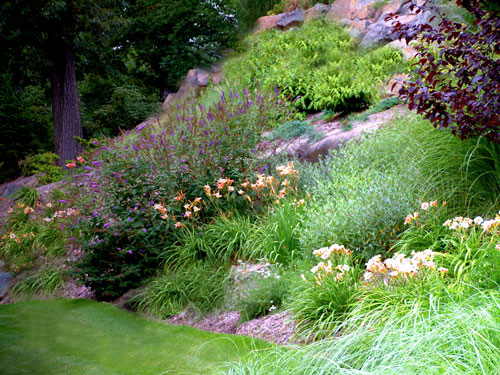
Perennial Garden Design on a Slope
Successful perennial garden design is a combination of a few things. Here are some tips, ideas and suggestions to make your life easier if you want striking color in your landscape.
- The planting design.
- The plant selection (the fun part!)
- Maintenance - very little needed!
Tips For Perennial Designs
- Make your planting bed of your perennial flower gardens wide enough so that there is room for layers of plants.
- If it is a perennial bed only, three feet wide should be the minimum in depth. The larger you make it, the more lush it can be!
- Place the larger perennial garden plants in the back of the bed if the bed is up against the house, shed, etc. Place lower perennials in front of these plants. You can even add a third layer.
- If the bed is out in the open, you can place the taller plants in the center with shorter plants at the bed edges.
- If you have a landscape retaining wall consider creating a perennial garden design in front of it.
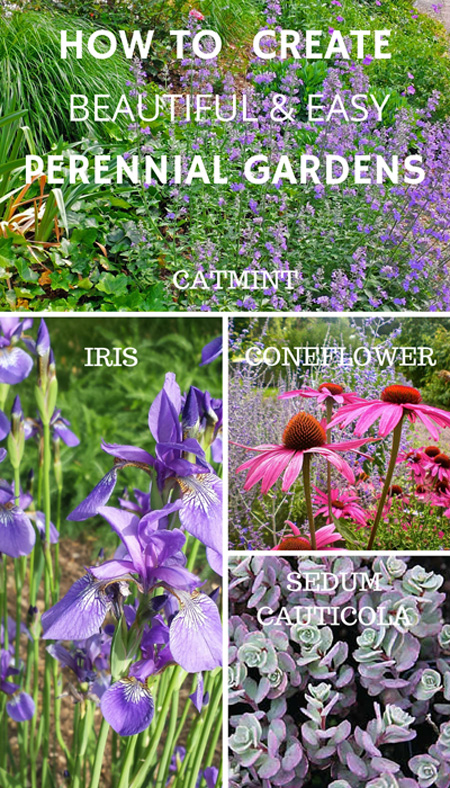 Creating a beautiful perennial garden can be done by using hardy plants, using many of them in masses, repeat plants, form and color and using various heights and textures.
- Do NOT make all perennial garden plants the same height. Boring! You might have a group of plants that are about 18"high, then next ot that a few that are 12"high, then repeat with plants that are 18" high or similar.
- Plant in groups. Imagine one Lavender plant blooming, Then imagine a group of 3, 5, 7 or more. You will have so many more flowers blooming together and this will be much more striking than one lonely plant, especially from a distance.
- Consider placing some evergreen shrubs as a background for the perennials. This will really make the perennial flowers "pop" in your perennial garden design!
Add a taller plant or garden ornament to break up any monotony. This could be a sculpture, urn, small fountain, birdbath, etc.
Perennial Garden Plants
- Most local nurseries carry plants that will do well in your area. However, it's good to know your planting zone. This is especially true when ordering plants online. You can find out what plant zone you are in by going here and entering your zip code. National Gardening Association
- Learn whether the location for your garden is sunny or shady and select plants that are appropriate. How many times have I seen plants in the wrong location that were suffering or just did not make it!
- Know
approximately when the plants you are considering bloom. This way you
will be able to choose ones that bloom at different times so that you
can have color all season long.
Some of My Favorite Perennial Flowers
To see some beautiful pictures of many of these plants, go here.
Daylily
Daylily plants come in a huge variety of sizes and
flower colors. The flowers can be showy. Each flower bud turns into a
pretty flower, yet each flower lasts for only a day....hence "day"lily.
Since it has many buds though, there are continuous flowers. Daylily's bloom in the summer for about three to four weeks.
There are a few varieties, however, which will bloom on and off all
season long, such as 'Stella D'oro'. The flowers are yellow. As with all
Daylily's, watch out if you have a deer problem. Deer love these
plants!
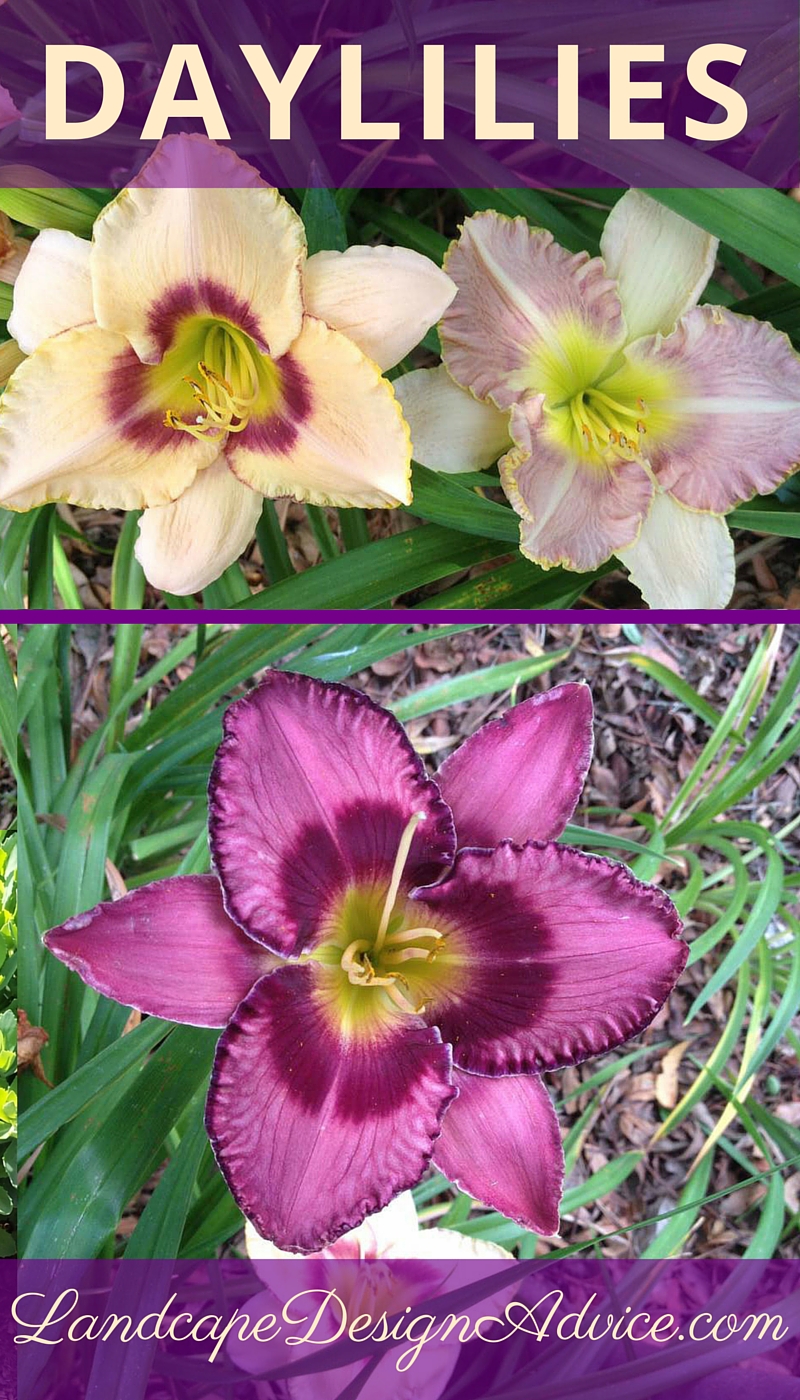 Add Daylilies to your perennial garden for summer color. There are so many colors to choose from. Each flower lasts for a day but there is an abundance of them.
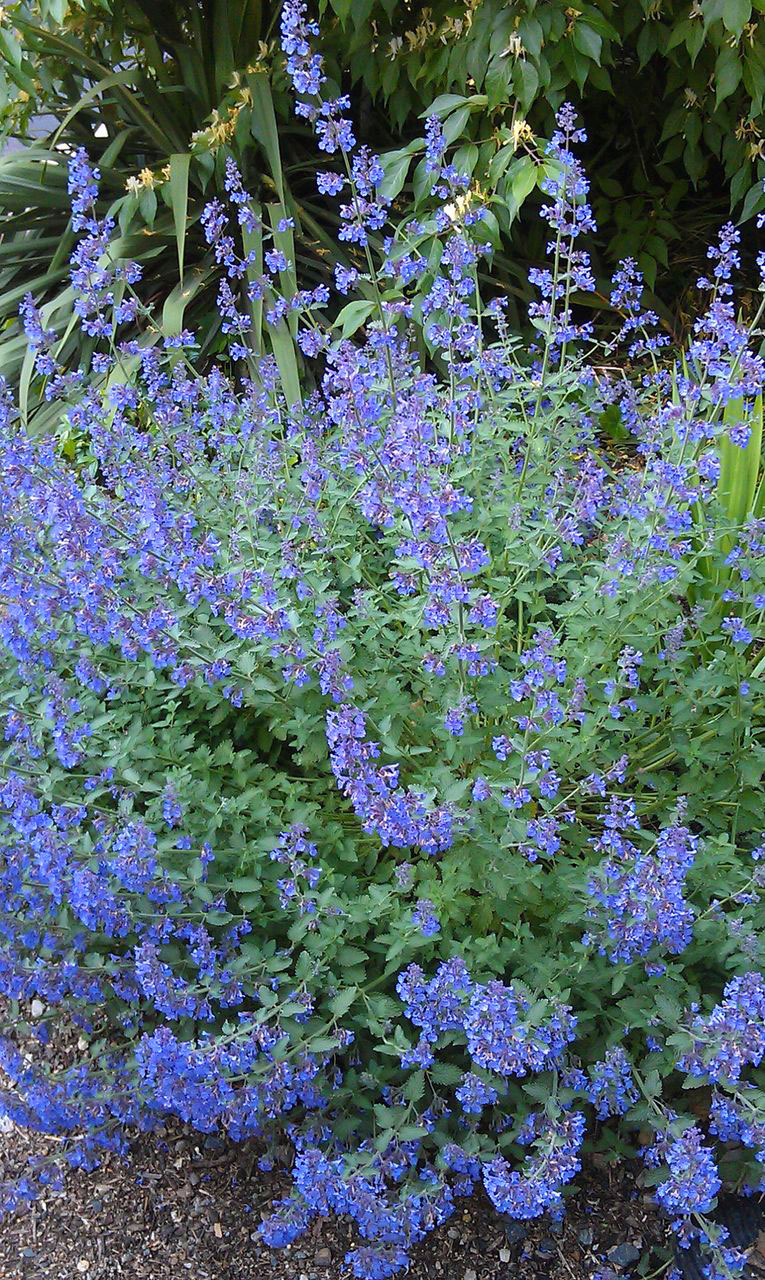
Catmint 'Walker's Low'
I love this plant. As I write, it is October, and it is still blooming! It smiled with its flowers all season long. The flower color is a soft purple, on the quiet side. This plant can get to be about 3 feet wide by about 12" - 18" tall. It will get a little "tired" looking in mid summer. But not to worry. Give it a pruning by cutting off the top 8" or so. It will rejuvenate nicely. This is one to definitely include in your perennial garden design.
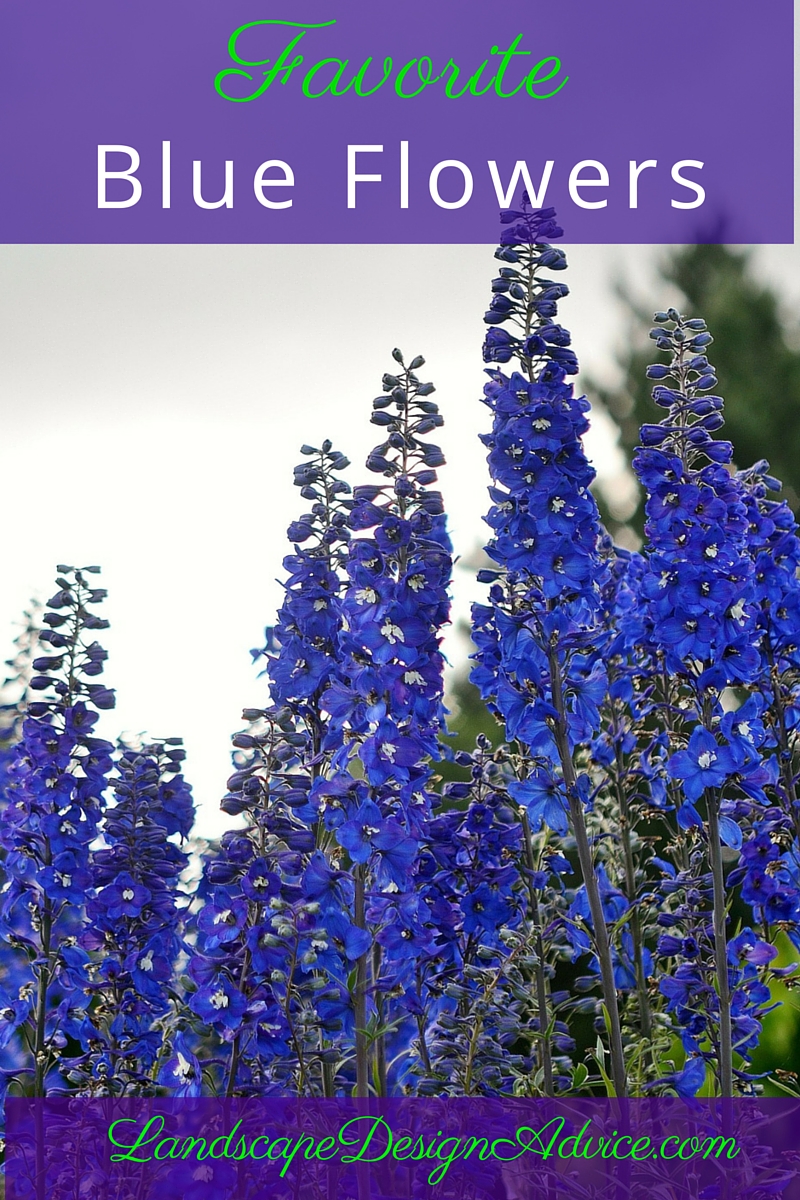
Delphinium
Delphinium can be temperamental. They don't always come back the next year. They are tall and can get knocked over in a storm. But I include them in this list due to their old-fashioned, outstanding charm. And the colors are breathtaking!!
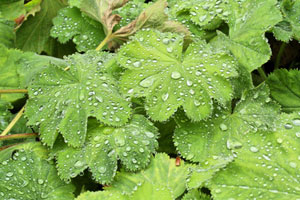
Lady's Mantle
This is a medium sized plant with beautiful foliage. The leaves are a medium green and wide. They catch droplets of water on their leaves in a very interesting way. They are loose and the yellow flowers are tiny. It's a very pretty perennial.
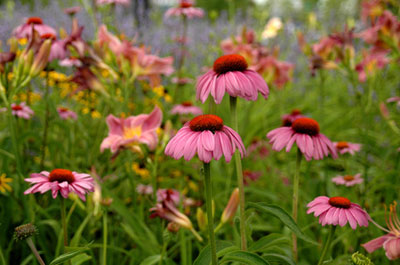
Coneflower
Coneflower is now available in many colors....pinks, whites, and interesting variations of pink, peach and orange. They are a mid to late summer blooming perennial and are rather easy to care for.
Peony
Peonies look more like shrubs than perennials. Their flowers are very showy. They come in singles and doubles and are a nice break in a perennial garden design from the typical flowering perennials since they are bushy looking. They bloom in late summer and early fall. Love them...one of my favorites!
Salvia
There are quite a few types of Salvia, but I love them for their purple colors. When in flower, these plants will jump out with color.
Sedum
Sedums are extremely easy plants to grow. There are low ones you can use between stepping stones or at the edge of your beds. There are taller ones which put on a great late summer/early Fall show, such as 'Autumn Joy'. They look great if you mix them with a mass of Maiden Grass for a good looking perennial garden design.
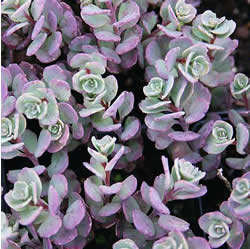
Sedum 'Cauticola'
Ornamental Grasses
There are many, but my two favorite ornamental grasses are Maiden Grass and Fountain Grass, the former being a taller one. As nice as the foliage is, it's just as wonderful to see the plumes in the late summer and early fall.
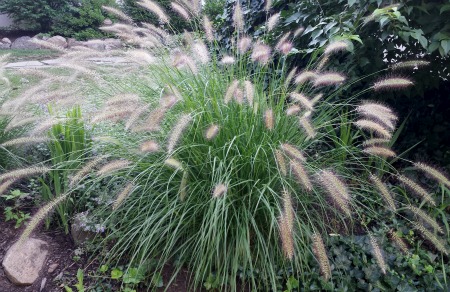 This Fountain Grass is the Species. There are many varieties of Fountain Grass and various heights. This is one of the taller ones, getting to be between 2 and 3 feet tall.
Fountain Grass - Species
Lamium
Lamium is another low growing plant. The flowers can be pink or white. The plant itself is nice even when not flowering and is used as a perennial groundcover.
Epimedium
This also is a perennial groundcover. It has beautifully shaped leaves and there are varieties with reddish tones to the foliage. Sometimes it is nice just to mix in this type of plant with all the other showy flowers in your perennial garden design.
Black-Eyed Susan
This is another late flowering perennial which is a gold/yellow color. These are very hardy and easy to grow. They will certainly provide a splash of color in your perennial garden design.
Related Pages
Shade Loving Perennial Garden Design
Easy to Grow Flowers
Purple Perennials
Blue Perennials and Annuals
At one time I managed the perennial department of a large garden center in New York. I was able to observe which plants looked good all season and which ones did not. I can honestly say that the list above will be attractive almost the entire season...generally speaking!
Tips on Perennial Care
Here are some general maintenance suggestions for low maintenance perennials in your perennial garden design, for the best look possible. Again, they are not necessary, except for the last one*.
Have fun with your perennial garden design! This type of garden is always evolving and changing.....but that is part of the enjoyment.
Learn more about designing with perennials and adding them to a front yard design!
Other plants are also discussed along with many tips for creating a striking front yard.
Many photos are included.
If you enjoyed this page, please share it!