Travertine Paving
Pavers and Tile

Travertine paving can be tile or pavers. Travertine tile is usually thinner than pavers. A travertine tile installation is done by setting the stones in concrete. Stone pavers are dry laid.
I like to use
the pavers on my design projects. They are stunning, easy to install,
cool to the touch, and resist freeze-thaw conditions. Travertine
maintenance is easy. Sealing travertine tile or pavers is optional but
sealers will protect from stains. Some of the most beautiful pool
projects I have designed included this type of natural stone for the
pool paving.
Travertine pavers come in many different colors and sizes. The french pattern is a popular one where there are four different sizes used to make the design.
Here are some examples travertine patios and how this stone can be used.
Travertine Pool Project of Mine
A Definite Favorite!
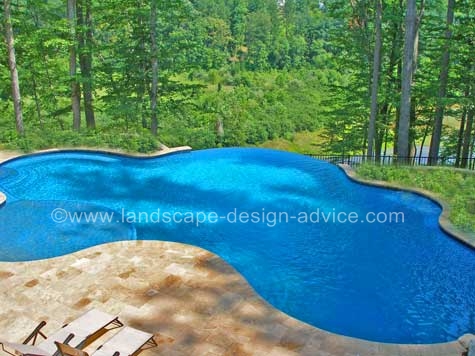
Yes, definitely a favorite of mine. See more of this project:
Two Colors of Travertine
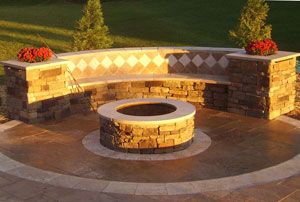
In this photo you can see how it's possible to be quite creative with
travertine.
Circular borders were created with another color and
emphasize the stone fire pit.
Natural stone was used for the wall with matching travertine for the seat. I love the mix of the two colors together in the paving design. Project by others.
If you'd like to read more about travertine, please visit my page types of travertine, where I discuss stone quality and the differences between honed, filled and tumbled travertine.
- Honed travertine is where the stones are "sanded" in layers to reduce the holes.
- Tumbled is another type of travertine if you want a rougher look. Non-tumbled pavers provide a smoother finish.
There is also the quality of the stones themselves. Not all travertine is the same! Also, should you use a travertine sealer and what kind? There are various types to use...some are water based while others are oil based.
Travertine Pavers in a Carmel Color
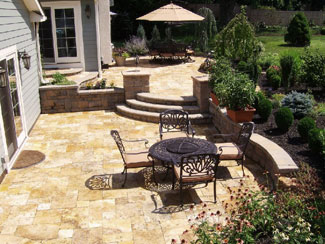
For this two level patio, a golden color was used and is lovely. Block walls were used for the retaining walls and blend well with the travertine.
Another option would have been to use travertine on the steps as the treads and use either natural stone (as the photo above shows) or mortared smaller sized travertine tiles on the risers.
In
addition to the travertine, some nice features of this design are the
curved steps and columns. The walls are seat wall height and provide
additional seating. Above photos courtesy of MuirView Landscape & Design - Morgantown, Pa.
Travertine Steps
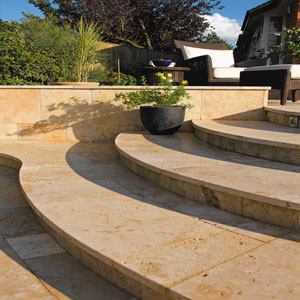
Travertine pavers were used here for the step treads, risers and walls.
The wide, curvilinear steps are striking and probably match the paving above. Treads are of the same material.
Photo courtesy of Paving Superstore
Whether you choose travertine stone tile or pavers, this is one of the loveliest paving materials available.
It's a natural stone, cool on the feet and costs are in line with dry laid bluestone.
Related Pages
Installing Travertine - simple directions
Swimming Pool Decking - other paving choices
Travertine Q&A - a discussion on all things travertine
Travertine Paving Fillers - what to fill the joints with
|
|


If you enjoyed this page, please share it!
Landscape Design Awards
Superior Excellence
Naturalistic Pool Award
Superior Excellence
Planting Design Award
Certificate of Merit
Formal Garden Award
Popular Pages