Designing Formal Ponds

Formal ponds can be dramatic, and are a completely different look
than natural ponds. Sometimes, the latter is not appropriate and
something more elegant is desired.
I recently designed a one to be located near the front entry of an impressive home. It is a focal point as you approach the house from a long driveway. Here are some of my design considerations. You might apply some of these concepts to any formal pool.
Due to the size of the home and its surroundings, I decided that the diameter of the pool was to be 18 feet.
When designing a pool such as this, keep the scale of the residence 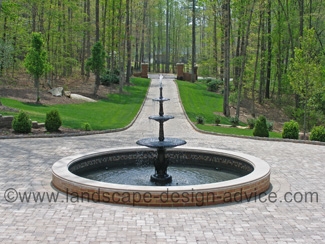 and the surroundings in mind. The clients were considering a large bronze fountain for the center focal point, and that is what was purchased.
- The wall is approximately 18 inches high and 1 foot deep and thus they can sit on it and enjoy the water and fountain.
- Since the home is brick, I decided that the outer perimeter of the wall was to be brick to match.
- The top of the wall, or wall coping, is limestone.
There were a few of design choices for the top of the wall.
- The wall coping was to be either formed concrete, bluestone or limestone.
- The concrete could have been fluted to give it some character and be similar in look to limestone. This would have been a much less expensive choice.
- If bluestone was chosen, I would have used fairly long pieces to minimize the number of joints.
- The limestone or bluestone would have to be custom cut based on the radius of the pool.
- This method would look great, but it would also be quite expensive.
As mentioned above, in the end limestone was chosen for the top of the wall.
Formal Pond Construction
The pool is actually constructed in a way that is similar to the construction of a regular swimming pool, the inside being concrete. The inner wall was tiled. (These types of pools can actually have a filtration system to keep the water clean. This would necessitate some equipment, just as in a standard swimming pool, and obviously is another cost consideration.) In this pond the water will be moving due to the fountain and a hidden pump.
Other Choices For Formal Ponds
- The pool itself can be any size, but I feel it should be a minimum of 12 feet in diameter.
- A seat wall is a nice feature, but not a necessity. The pool can be almost flush with the ground.
- Various types of fountains can be used as well as bubblers. Bubblers simply bubble in different areas of the water.
- A seat wall or even a low wall can be faced with various natural stone, even travertine.
Other Considerations
Keep the pond in scale with the surrounding buildings and spaces.
In addition, make sure all materials blend well together.
If using a formal fountain, select one that will be a true focal point and not be too small or weak.
And good workmanship!
If you enjoyed this page, please share it!
Landscape Design Awards
Superior Excellence
Naturalistic Pool Award
Superior Excellence
Planting Design Award
Certificate of Merit
Formal Garden Award
Popular Pages